From the late 1940s-on, Volvos have been dashing – and winning. Their first rally title originated from a skilled driver and an extreme, little PV444 in 1958. During the 1990s, it was the Volvo 850’s go to thrash the challenge. Also, the trophies continue accompanying successes like the 2017 FIA World Touring Car Championship.
The Volvo 850 that was giving Euro producers such a great amount of issue in the British Touring Car arrangement during the ’90s (presented above) was constructed, prepared and hustled by Flash Engineering – the organization that would become Polestar when Jan “Streak” Nilsson left in 2004. They won the initial two years of the Swedish Touring Car Championship and set second four of the following five years. So the speed family is there.
Volvo acquired Polestar in 2015, and more blazing renditions of their normal vehicles began showing up at sellers in 2016. From that point, it was just a little jump for Polestar to turn into Volvo’s elite image – driving their transition to electric power.
Since you know why the vehicle bodes well, the main inquiry remaining is whether it’s a decent vehicle.
300 drive was at one time the informal limit for execution vehicles. Today you can get that in a Camry. Or then again minivan.
500 pull is the new benchmark, and the Polestar blows past it. How far relies upon who you inquire. Vehicle and Driver reports 591 hp. Polestar Cars claims 600 hp. Also, Road and Track says 619. Whatever the genuine yield, it’s unquestionably all that could possibly be needed to mess around with. As is the way it puts the shut down.
A turbo-and supercharged 4-chamber connected to a wrench mounted electric engine moves 397 strength (or 375, contingent upon who you accept) through the front wheels. In the back, two electric engines each drive a wheel with a joined 232 pull. Or on the other hand perhaps it’s 222. Who knows? Be that as it may, the number everybody appears to concede to is 4.2. That is how long it takes to go from 0-60. For the most part in light of the fact that the front wheels battle for footing and the back engines need more capacity to compensate for it at low speeds. Be that as it may, from a moving beginning, or more 30mph, the Polestar 1 essentially flies.
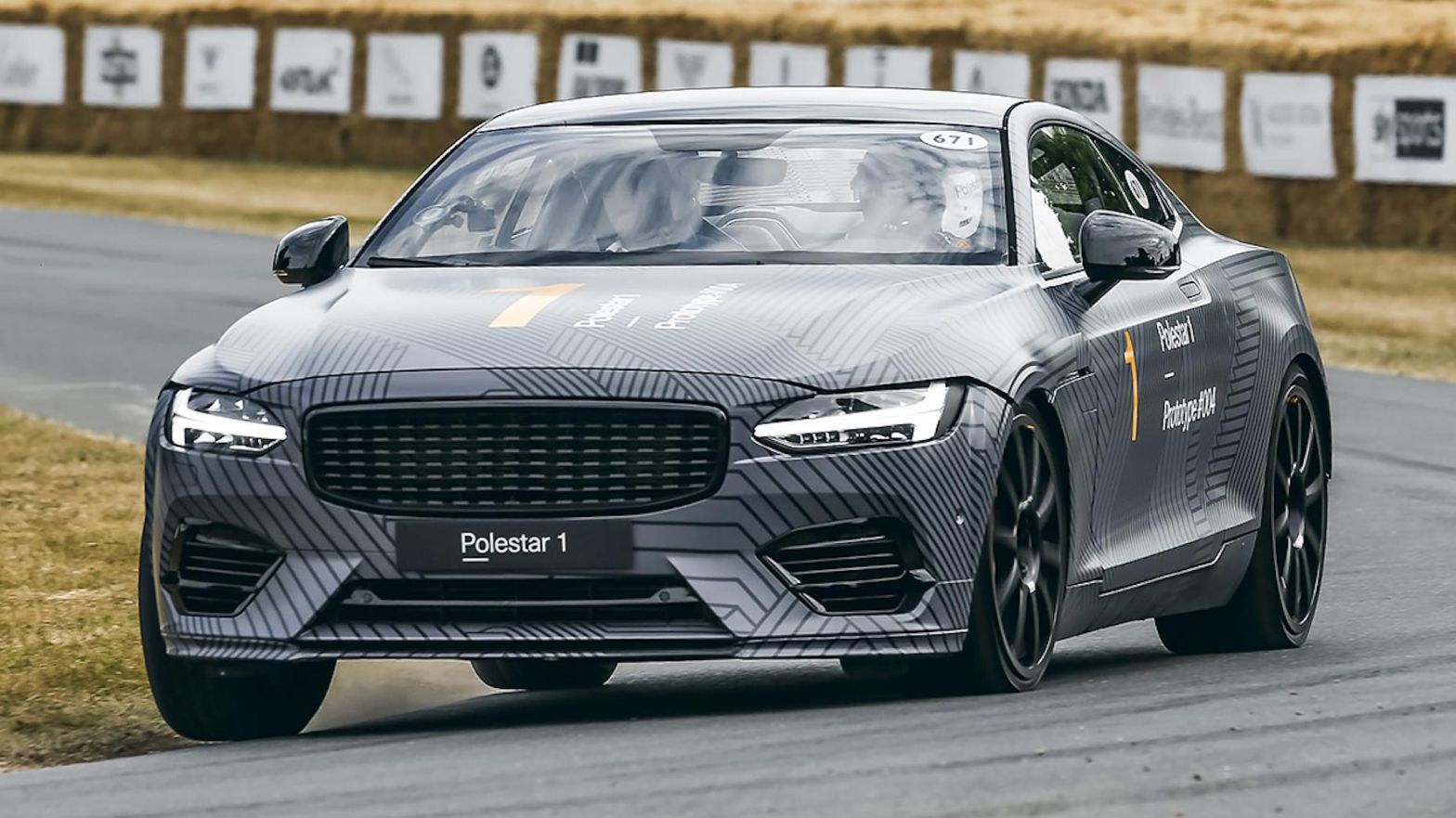
There’s no denying that the Polestar 1 looks fabulous. In light of the 2013 idea vehicle by Volvo’s Chief Design Officer Thomas Ingenlath (and CEO of Polestar Cars), it’s obviously identified with the present harvest of Volvos. However an observing eye will likewise note likenesses to the Audi S5 and Dodge Challenger in its solid position, high beltline, and low rooftop. What’s more, the pleasantly raked back window gives it a trace of Mustang fastbacks new and old. All things considered, the Thor’s Hammer front lamp configuration concretes it as a Volvo.
Where it leaves from Volvo’s lineup: Polestar went to carbon fiber for the sides, entryways, hood, trunk cover, and whole rooftop structure. That shaved 500 lbs off similar components made of steel and brought down the focal point of gravity for better taking care of without giving up quality – or the structure tasteful.
While the majority of us might have the option to value the Polestar 1 from photographs or a possibility locating out and about, a fortunate not many will have the option to slip in the driver’s seat for an increasingly close encounter. Furthermore, fortunate is the correct word. Since, apparently, this vehicle is as fulfilling to guide for what it’s worth to peer at.
How did Polestar make an over two ton porker feel light on its wheels? 1) A close to 50/50 weight balance. 2) Manually customizable dampers from Öhlins that let you change the dealing with however much you might want, yet are splendidly set from the processing plant. 3) A carbon fiber “dragonfly” that “profoundly improves torsional solidness at one of the basic focuses in the body structure, between the center of the floor and back development,” as Polestar says. Also, 4) stunt, back wheel torque vectoring that comes graciousness of planetary apparatus sets connected to the back engines that convey precisely the perfect measure of capacity to each back wheel to guarantee most extreme grasp and cornering strength.
 Automotive News Magazine